


3jl | Exploring the Diverse World of Strategy Games
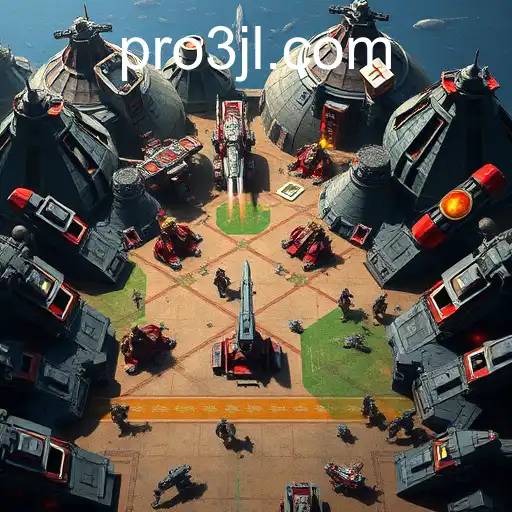
Strategy games have long captivated players with their intricate planning, tactical depth, and the intellectual challenges they present. As one of the most enduring genres in the gaming industry, strategy games require players to employ foresight, develop tactical approaches, and make pivotal decisions that determine the outcomes of virtual battles, economic empires, and more.
The term 'strategy games' covers a broad spectrum of sub-genres, including turn-based strategy (TBS) games, real-time strategy (RTS) games, and grand strategy games, each offering unique gameplay mechanics and experiences. In TBS games, players take turns to move their units or make strategic choices, examples being the renowned 'Civilization' series or 'XCOM'. These games allow for deep thought and careful planning, as players are not rushed by the ticking clock.
RTS games, on the other hand, test a player's ability to think on their feet and make quick decisions in real time. Classics like 'StarCraft' and 'Command & Conquer' have set high standards, requiring players to multitask efficiently, manage resources, and outmaneuver opponents in dynamically changing environments.
Grand strategy games, such as 'Crusader Kings' and 'Europa Universalis', take players into the complex realms of politics, economics, and military tactics on a larger scale. These games frequently incorporate elements of simulation, allowing players to control nations or empires over large time periods, offering a sandbox-like experience with numerous possibilities and outcomes.
The appeal of strategy games lies in their ability to engage players' minds and provide a sense of accomplishment through problem-solving and strategic planning. They often simulate real-world tactics and scenarios, making them not only entertaining but also educational. The skills honed in strategy games, such as critical thinking, resource management, and tactical analysis, are valuable in real-life situations.
Furthermore, strategy games have fostered vibrant communities of enthusiasts who frequently engage in discussions, share strategies, and even partake in competitive gaming. Events and tournaments are often held, showcasing players' strategic prowess and elevating the genre's influence in the eSports domain.
With the advent of modern technology and advancements in AI, strategy games continue to evolve, offering increasingly sophisticated scenarios and smarter adversaries. This evolution ensures that the genre remains fresh, challenging, and appealing to both veterans and newcomers. As the landscape of gaming continues to expand, strategy games maintain their place as a staple in the gaming community for those who relish the thrill of outsmarting their opponents.
In conclusion, strategy games provide an unparalleled intellectual exercise, demanding both patience and shrewd tactical awareness. As a genre, it offers diverse experiences that cater to a wide range of preferences, ensuring its continued popularity and impact on the gaming world.
